Under the law, claims in advertisements must be truthful, cannot be deceptive or unfair, and must be evidence-based. For some specialized products or services, additional rules may apply.
Plain Language Guidance
Promoters of fraudulent business opportunities run ads where their targets are likely to see them: in daily and weekly newspapers, in magazines, and on the Internet. Advertising sales staff with a well-trained eye can recognize – and reject – ads promoting bogus promotions.
Advertising on the Internet? The rules that apply to other forms of advertising apply to online marketing, too. These standards protect businesses and consumers – and help maintain the credibility of the Internet as an advertising medium.
Focusing on federal truth-in-advertising standards, this A-to-Z primer is an essential resource for businesses of any size.
Even though the FTC has rescinded its Nursery Guides, established truth-in-advertising standards still apply to the sale of trees, shrubs, and other products used for outdoor planting. Industry members also should consider long-standing FTC guidance regarding products collected from the wild state.
Some resumes list credentials — like a college degree or professional certification — that sound credible, but were bought from “diploma mills.” Human resources professionals need to educate themselves on the steps to take to suss out suspect degrees.
If the disclosure of information is necessary to prevent an ad from being deceptive, the disclosure must be clear and conspicuous. Read more about why fine print is not so fine in advertising and what you need to do to disclose the details of the deal.
Do you have questions about multi-level marketing? The FTC staff has guidance to help members of the MLM industry apply core consumer protection principles to their business practices.
Do you sell products by mail, by phone, or online? This publication discusses what the FTC's Mail Order Rule covers, offers how-to compliance advice, answers common questions, explains where to go for more information – and includes a copy of the Rule.
Do your product warranties comply with law? This guide explains the Magnuson-Moss Warranty Act, the federal law governing warranties on consumer products.
If you use email in your business, you need to know about the CAN-SPAM Act. The law establishes requirements for commercial messages and gives recipients the right to have you stop emailing them. The FTC enforces the CAN-SPAM Act and the accompanying CAN-SPAM Rule.
The Consumer Review Fairness Act protects consumers’ ability to share their honest opinions about a business’s products, services, or conduct in any forum – and that includes social media. The FTC has tips to help your company comply with the law.
People who rely on online reviews of companies, products, and services should be getting an accurate picture of what other consumers think. If you operate a website or platform that features reviews, have processes in place to ensure those reviews truly reflect the feedback received from genuine customers.
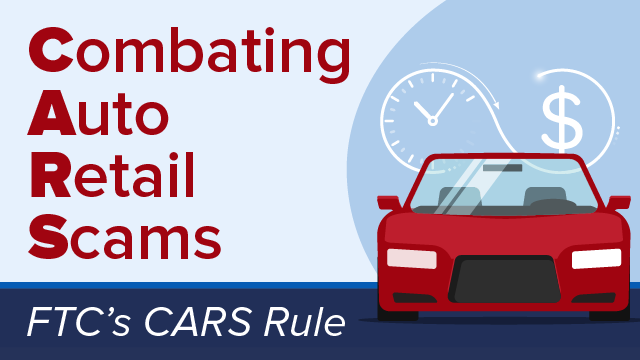
The primary purpose of the FTC’s CARS Rule is to add truth and transparency to the car buying or leasing process by making it clear that certain deceptive or unfair practices are illegal – for example, bait-and-switch tactics, hidden charges, and other conduct that harms consumers and honest dealers. Why is it called the CARS Rule? Because the Rule is about Combating Auto Retail Scams that cost consumers billions of dollars each year and cause honest dealers to lose business.
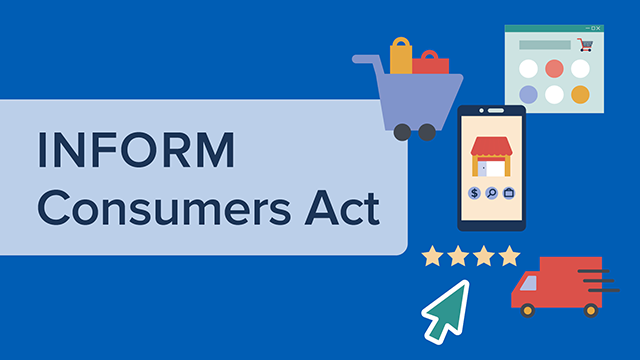
If your business is an online marketplace or a "high-volume third party seller" on one of those platforms, the INFORM Consumers Act requires certain information collection, verification, and disclosure requirements.
Marketers and publishers are using innovative methods to create, format, and deliver digital advertising. One form is “native advertising,” content that bears a similarity to the news, feature articles, product reviews, entertainment, and other material that surrounds it online. But as native advertising evolves, are consumers able to differentiate advertising from other content?
This article is part of the FTC’s efforts to help small business owners avoid scams. It explains common scams that target small businesses and non-profit organizations, describes scammers’ tactics, and provides steps people can take to protect their company from scams. Copies can be ordered for free at ftc.gov/bulkorder.
Do you know the buzz words that may be a tip-off to a rip-off? By spotting – and stopping – deceptive ads before they run in your publication or on your station, your sales staff can help maintain your reputation for accuracy.
If you sell business opportunities, including work-at-home bizopps, find out how the FTC’s revised Business Opportunity Rule may apply to you. Avoid a compliance miscue by making required disclosures and steering clear of prohibited practices.
Consumers rely on online reviews in deciding what to buy. But some businesses abuse that trust by writing or procuring fake reviews or by paying supposedly independent websites for good rankings. Is your company taking steps to avoid that kind of deception and manipulation?
Do you sell products on online platforms? If you meet the definition of a "high-volume third party seller," the INFORM Consumers Act may impact your business. The FTC has more information about the law.
Resources
Do you sell products by mail, by phone, or online? This publication discusses what the FTC's Mail Order Rule covers, offers how-to compliance advice, answers common questions, explains where to go for more information – and includes a copy of the Rule.